Artificial Intelligence is everywhere, whether you like it or not! Every time you go online, a different company has rolled out a different AI-powered tool that’s completely sped up whatever it was that you were painstakingly trying to do. But seeing changes happen at this exponential rate, naturally you might be a bit worried about AI’s capabilities; particularly if you’re in a digitally-oriented job role, where AI promises faster output, cheaper content and the chance to make human error obsolete.
So, does this mean we’re all in danger of being taken over and replaced? The short answer is no, but you should be aware of how times are changing, and how you can use all these new tools to make your work more efficient.
The Good (what AI can help you with)
The fact that I’m writing this article now shows you the prevalence of AI in modern working life, and with good reason too – it can be very useful!
As far as what AI can greatly improve, the time-consuming and repetitive tasks are top of the list. Data entry, scheduling & code creation, for example, are all pretty essential when dealing with clients, but also pretty boring, so it’d be nice to be able to palm some of these tasks off to the machine with no concept of monotony. Meta and Google, from experience, are the gold standard for creating AI that’s actually helpful – in the 4 years that I’ve been working in PPC ads, the time it takes to create a single campaign has decreased by at least half due to all the new streamlined, AI-powered features. Although, the control you have has also decreased just as much…
Creatively speaking, every human hits the wall at some point. As nice as it’d be to be able to generate ideas that hit the mark 5 days in a row, unfortunately the computers have our number on this one, and can be a helpful crutch when blank-page syndrome gets to you while you’re on a deadline. AI excels at writing first-draft content – blog post outlines, ad copy ideas, meta descriptions, product descriptions, and even basic emails. Don’t get me wrong, it’s not perfect (and human editing is always needed), but for breaking writer’s block or scaling up content ideation, it has its uses for sure.
Many agencies now use tools like ChatGPT or Claude to generate concepts and even entire pieces of work; next time you see a publication that looks a little too perfect, have a deeper glance and see if you can spot any telltale signs of AI!
The Bad & The Ugly (why you shouldn’t be too concerned just yet)
Despite what I-Robot tries to convince you, machine learning doesn’t understand emotions, nor human context, politics, or nuance. This means that you probably still shouldn’t be trusting AI with anything important, particularly regarding messaging tone or branding!
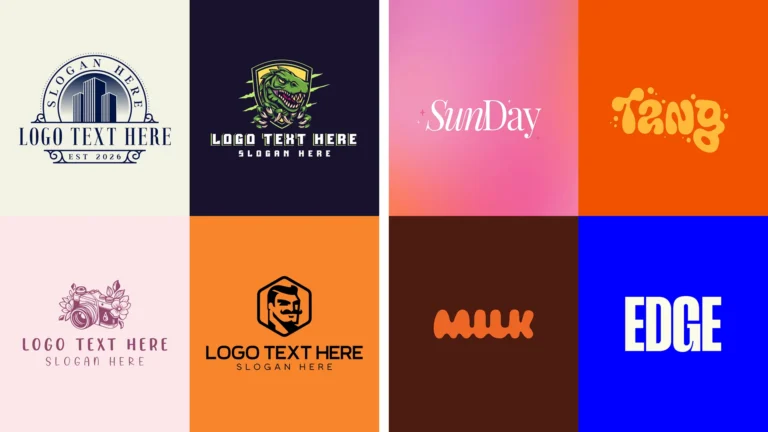
Remixing what’s already out there and producing an entire new creation are two different kettles of fish, and much to the delight of our graphic designers there are some serious limitations when it comes to AI’s innovation. Don’t get me wrong, it’s come a long way in the past few years, and is a lot more prominent nowadays, but artificial art still makes us grimace. Creativity, humour, cultural trends, subtle brand tones – all yet a work in progress for machines. *Insert grim AI art examples*
ChatGPT doesn’t have a moral compass (yet), and so it doesn’t understand how to navigate compliance, nor can it pick out when something might be seen as insensitive. There’s a lot of ways in which AI can show negative bias that can affect your brand image if you use too much of it – Chapman University explain it far better than I can. Brand reputation is more important than ever recently; stick to human oversight, even if it takes a little longer.
Embrace AI, But Don’t Let It Take Over
As aptly named by Microsoft, if you’re using AI in your business it should be seen as a co-pilot, rather than giving it the reins. At the end of the day, you’ve (probably) got to where you are without having to depend on machine learning, and so while it’s a very useful tool to have at your disposal, it shouldn’t replace the use of the big beautiful organ in your skull. Realistically, if you can’t be bothered to write something, how can you expect your audience to be bothered to read it?
Using AI wisely can boost your productivity and keep your costs low, but it still needs human input to even know where to begin. If your business needs creativity, empathy and strategic judgement, then you’ll find a much lower ceiling if you’re relying on a machine to do your critical thinking.
At Unit, we understand the use of AI in select instances, to keep tasks operating at their most efficient. But the strategy and the graft to keep everything flowing still comes from our team. Every campaign is grounded in human insight and executed with clarity, it’d be a sad world if all we did was interact with robots!